Europe, part 3: Christmas in Italy — Rome, Florence, Venice
Trip: Rome → Florence → Venice · December 24–30, 2025 · final leg of a three-country European trip
After Berlin and Barcelona, Italy was the leg I’d been saving up for — a week over Christmas with Dan, moving Rome → Florence → Venice by train. It ended up being the best part of the entire trip, and the part I’d most readily repeat.
Rome (Dec 24–27)
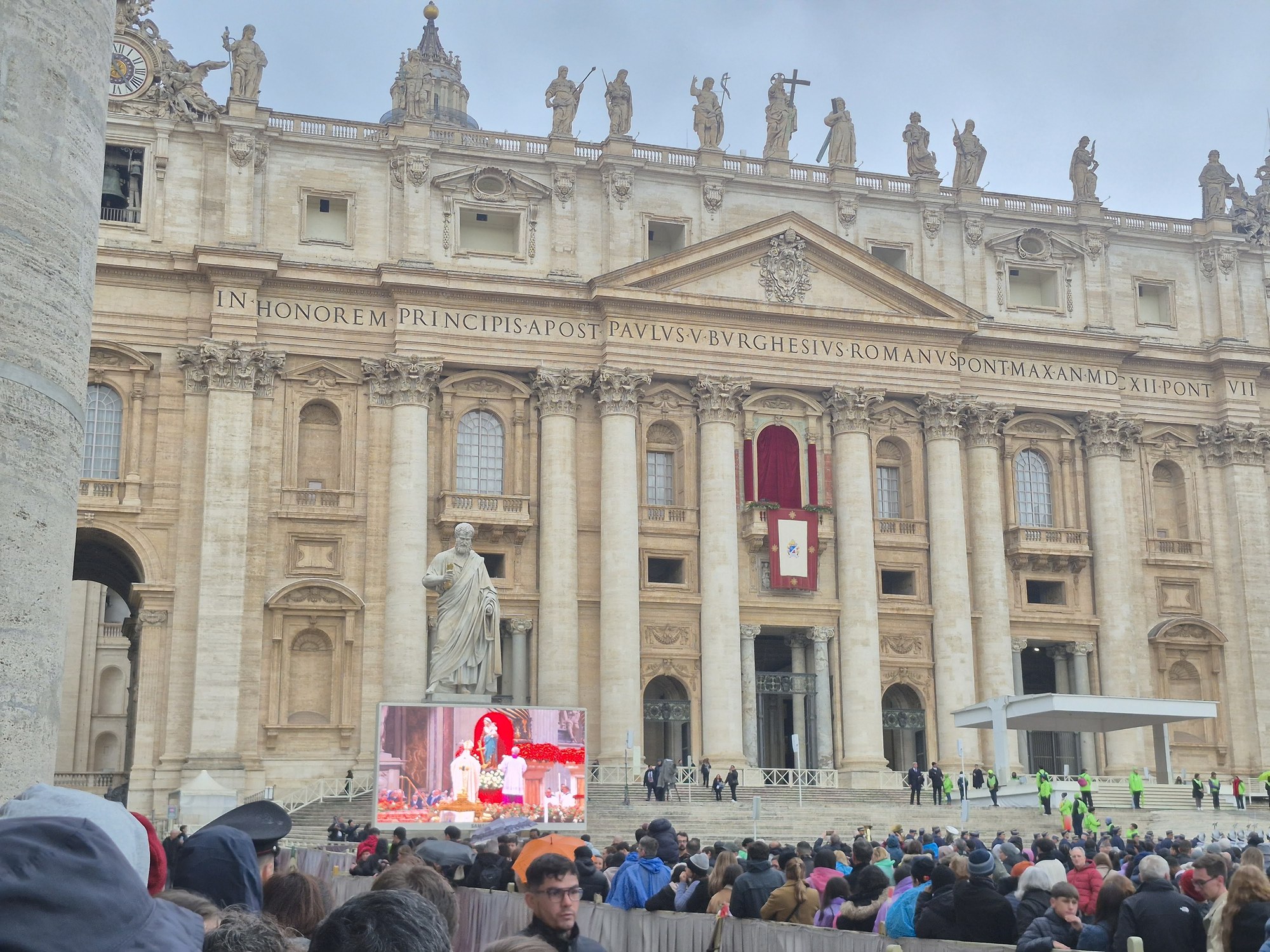
Christmas morning at St. Peter’s Square — the Pope celebrated the Mass.
Christmas morning at St. Peter’s
We were in St. Peter’s Square for Christmas morning Mass, with the Pope himself celebrating — and we’d ended up in a good spot, close to where the papal carriage passed. I’m Catholic, and I don’t really have language for what it’s like to spend Christmas at the centre of the church you grew up in, an ocean away from where you grew up. It’s the single most memorable Christmas I’ve had.
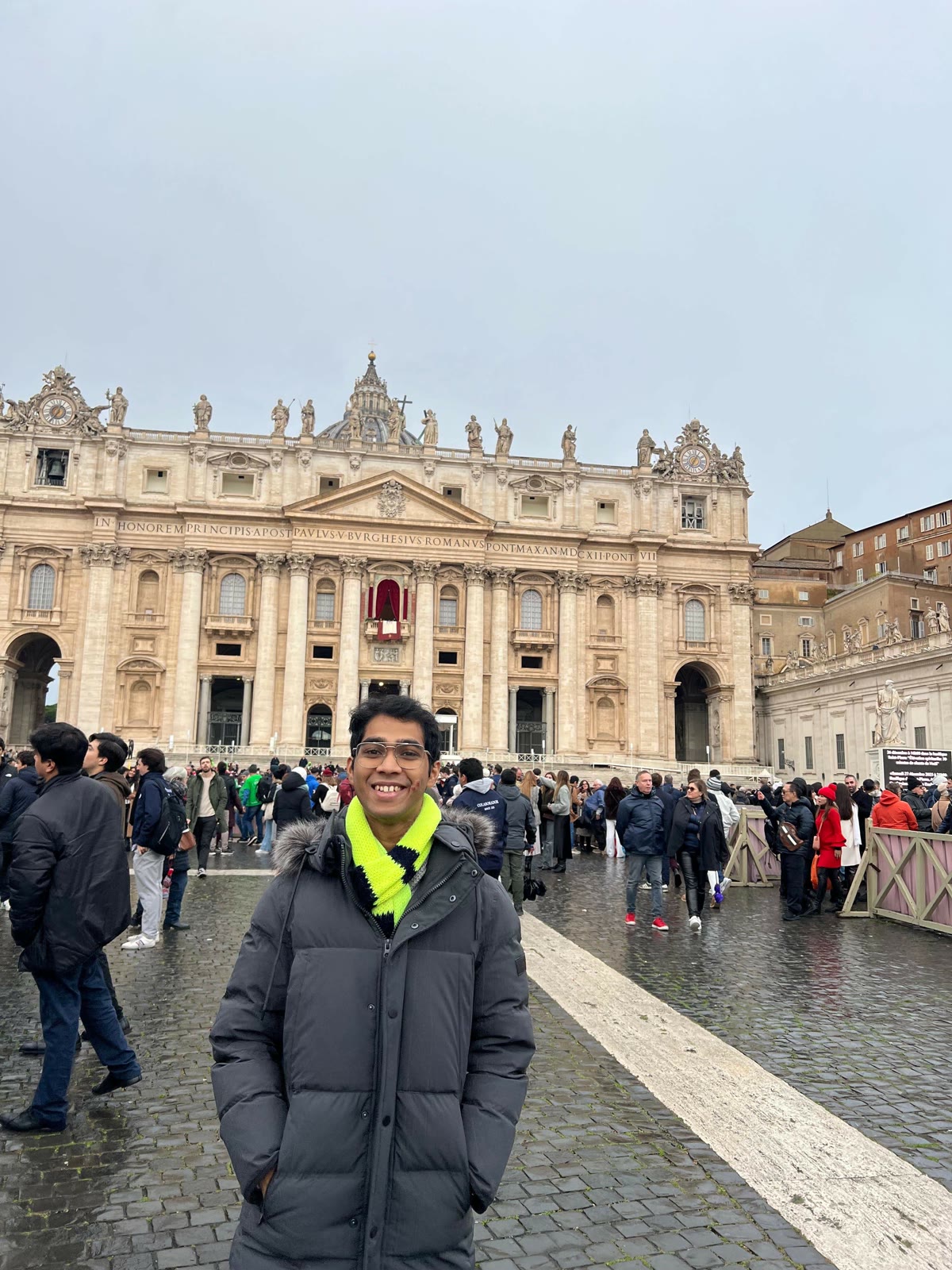
Me in the square on Christmas morning.
We also did St. Peter’s Basilica properly — including climbing the dome, which I’d rank as one of the best things in Rome: you come out overlooking the whole of Vatican City. Worth every one of the several hundred stairs.
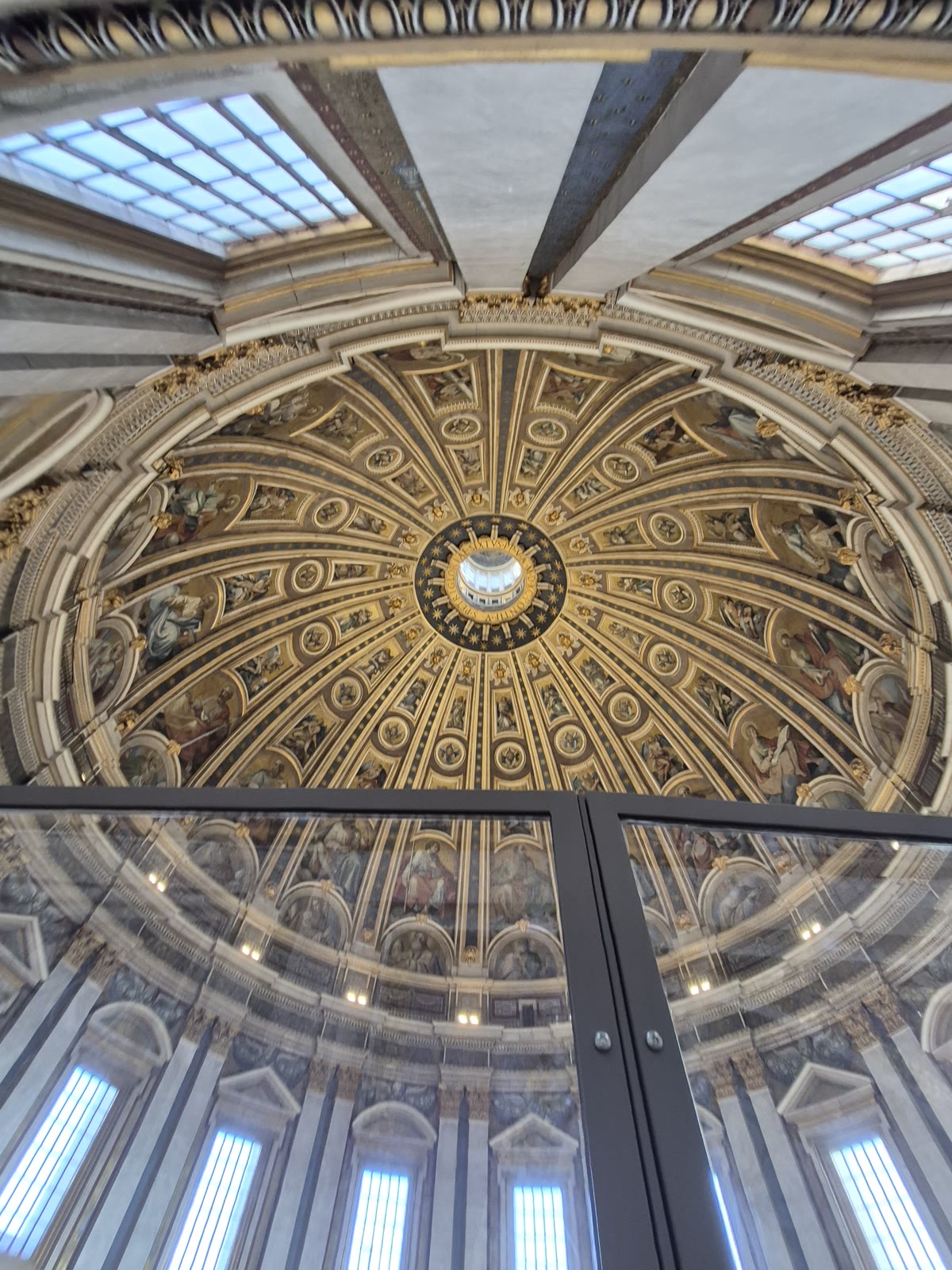
Looking up into the dome from the gallery, on the climb to the top.
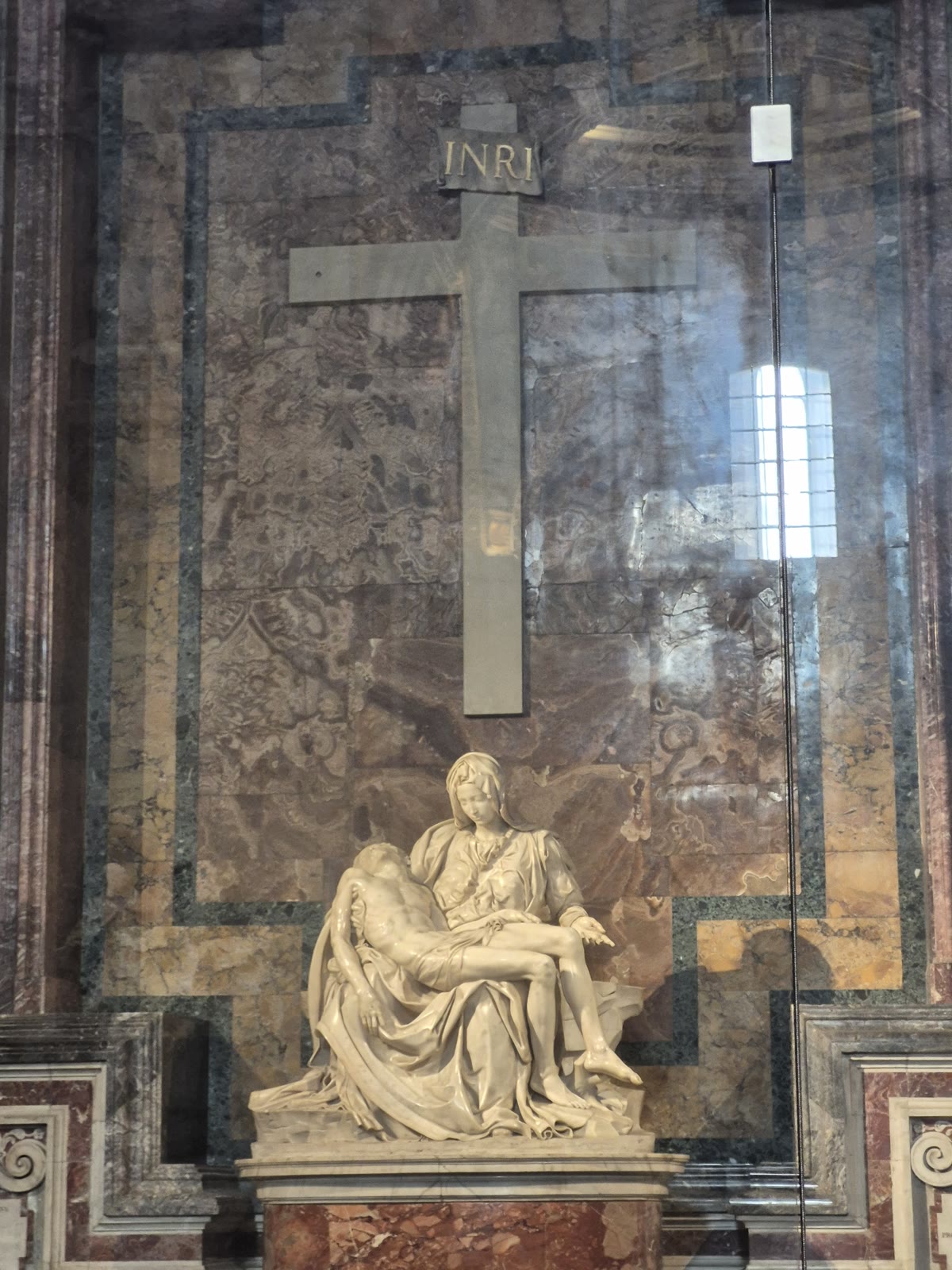
Michelangelo’s Pietà, inside the basilica.
The Vatican Museums and Sistine Chapel came with fast-track entry (the regular line is measured in hours). Room after room of Michelangelo and Botticelli, ending under that ceiling. No photos allowed in the chapel, which honestly makes people actually look up.
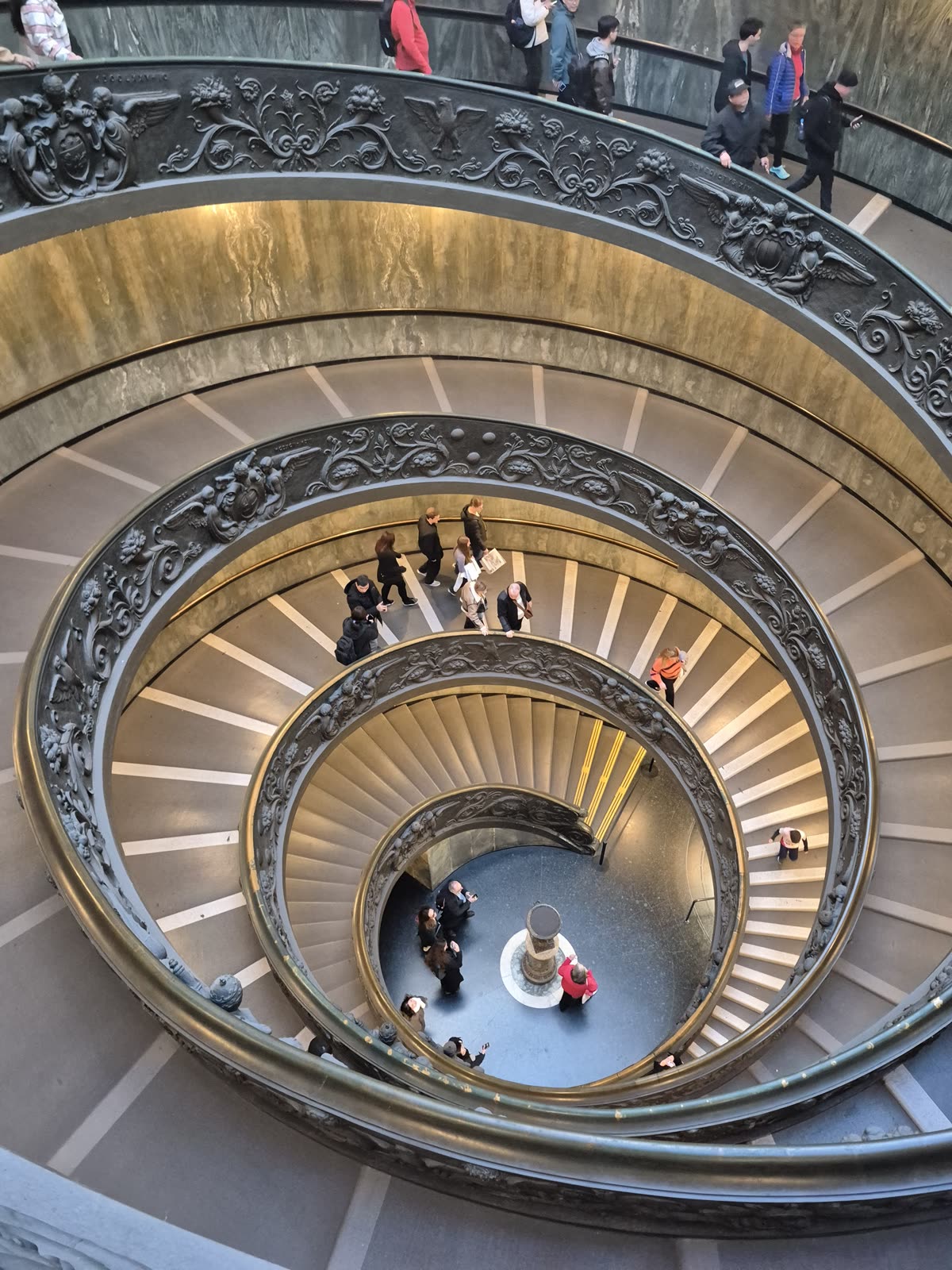
The spiral staircase on the way out of the Vatican Museums.
Two thousand years, still standing
What impressed me most about Rome wasn’t any single sight — it was the age of things that are still just… there. The Colosseum has stood since around 80 AD. The Pantheon is over 2,000 years old, with marble brought from Egypt, and you can walk in for free and see Raphael’s tomb (which delighted the Dan Brown reader in me — Angels and Demons fans will understand). Every carving is done to a level of detail that made me reflect on focus itself: the people who made these had an intensity of attention that we, with our phones, mostly don’t.
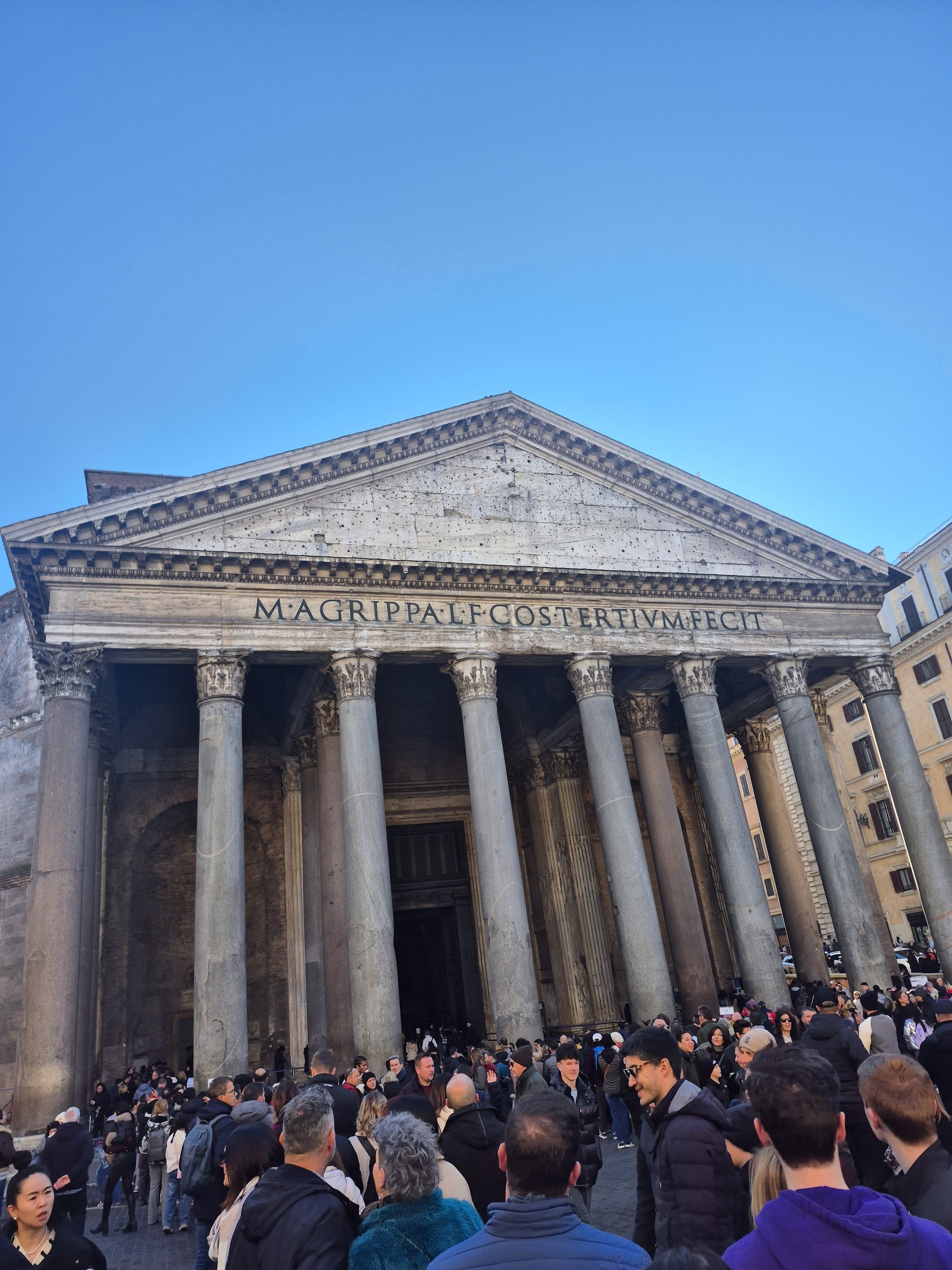
The Pantheon — over 2,000 years old and still in use.
One evening at the Colosseum I did something that became my favourite travel hack of the trip: I stood in front of it and used ChatGPT as a live tour guide, going back and forth for a couple of hours — Roman history, gladiator psychology, why civilisations collapse, why the marble skin was stripped off the stone skeleton. A knowledgeable guide in your pocket, for free, at night, at your own pace. I’ll be doing this at every historical site from now on.
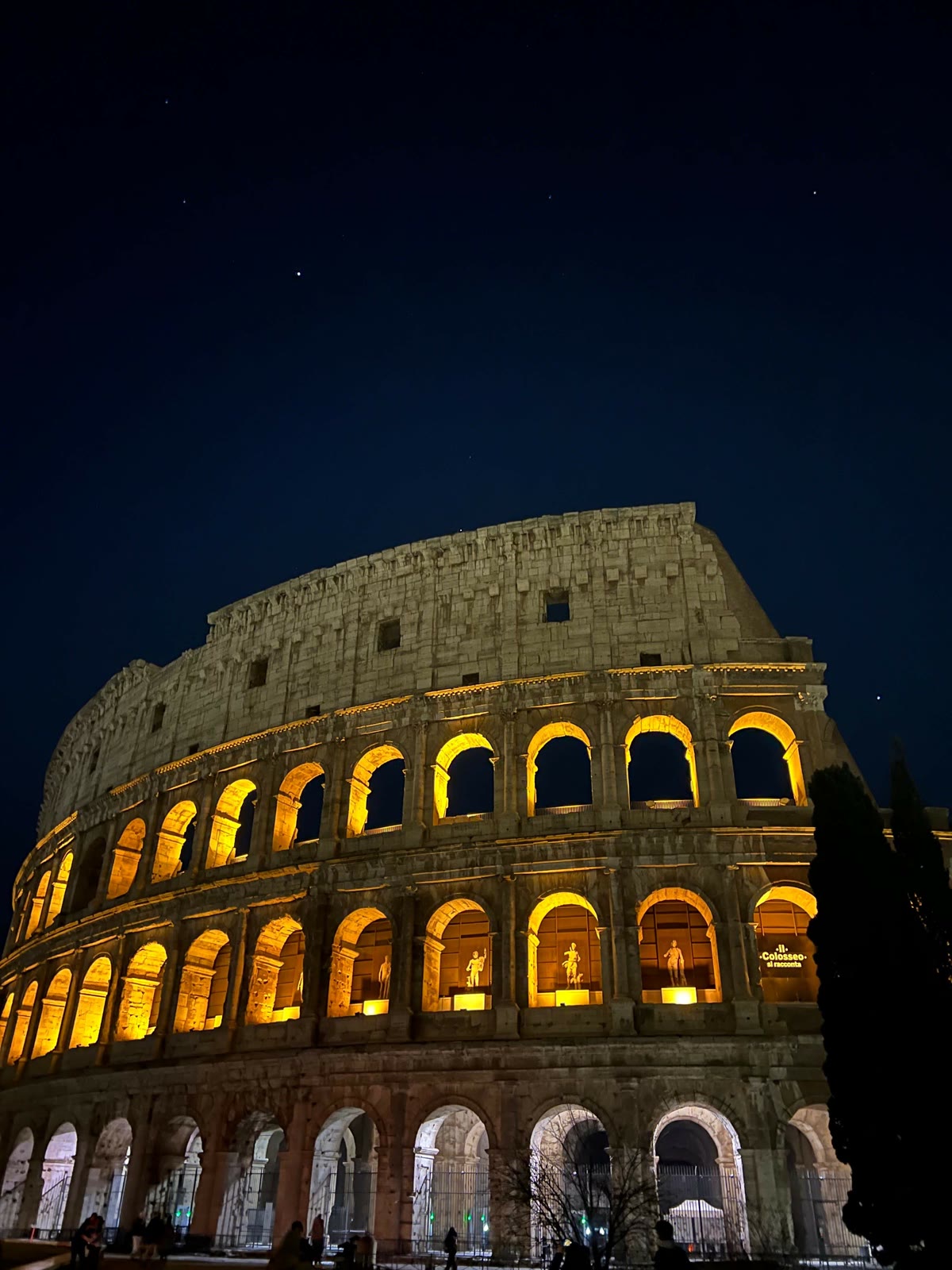
The Colosseum at night.
On the evening of the 26th we also went to Santa Maria Maggiore, one of the four great basilicas of Rome, which had its Holy Door set up for the 2025 Jubilee year.
The rest of Rome: the Spanish Steps, the Trevi Fountain (we made our wishes — but beware the currency exchanges nearby, where $100 bought a scandalous 57 euros), and a walking tour with a guide named Virgilio, who was our favourite person of the whole week. A guide named Virgil, guiding people through Rome — the jokes write themselves.
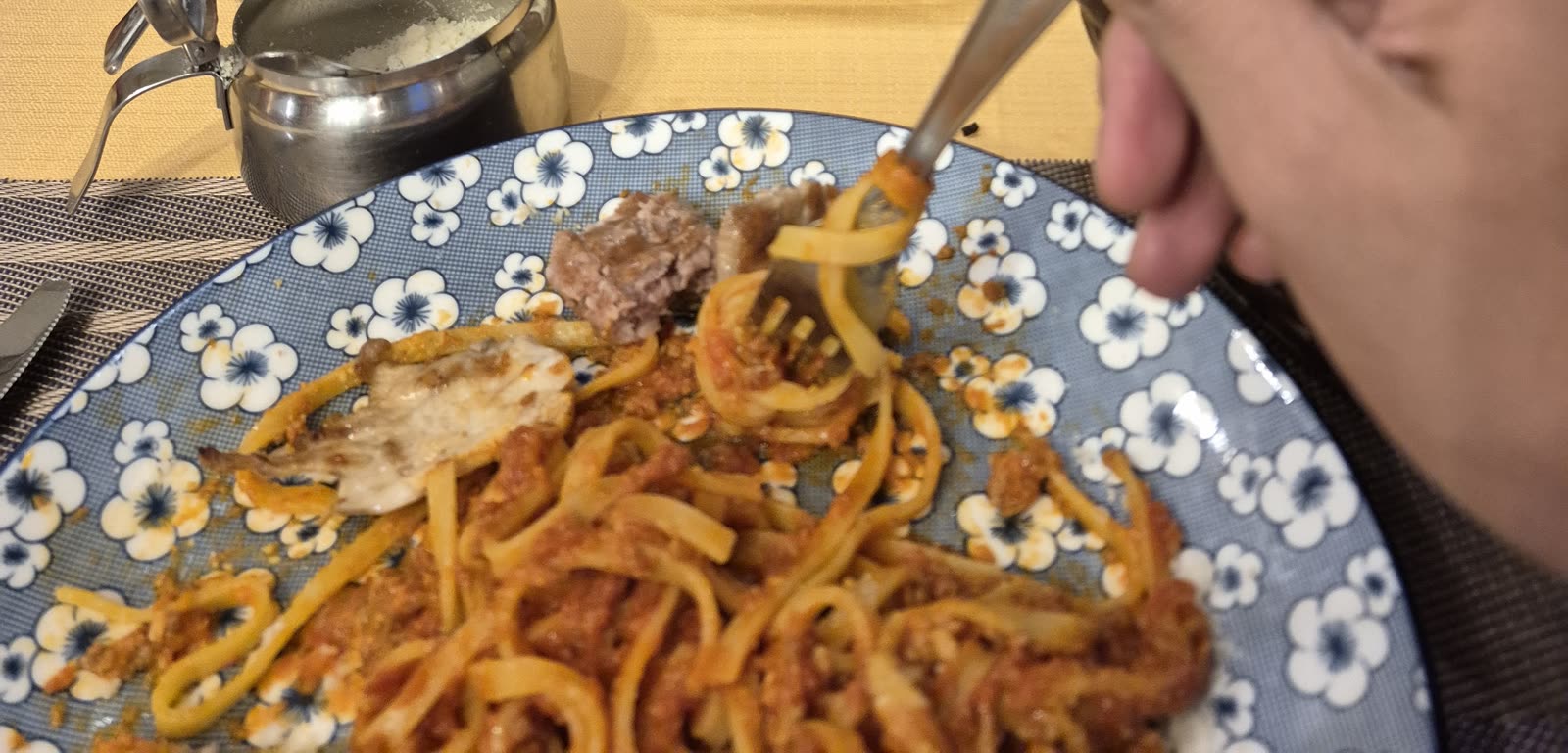
Pasta for dinner in Rome.
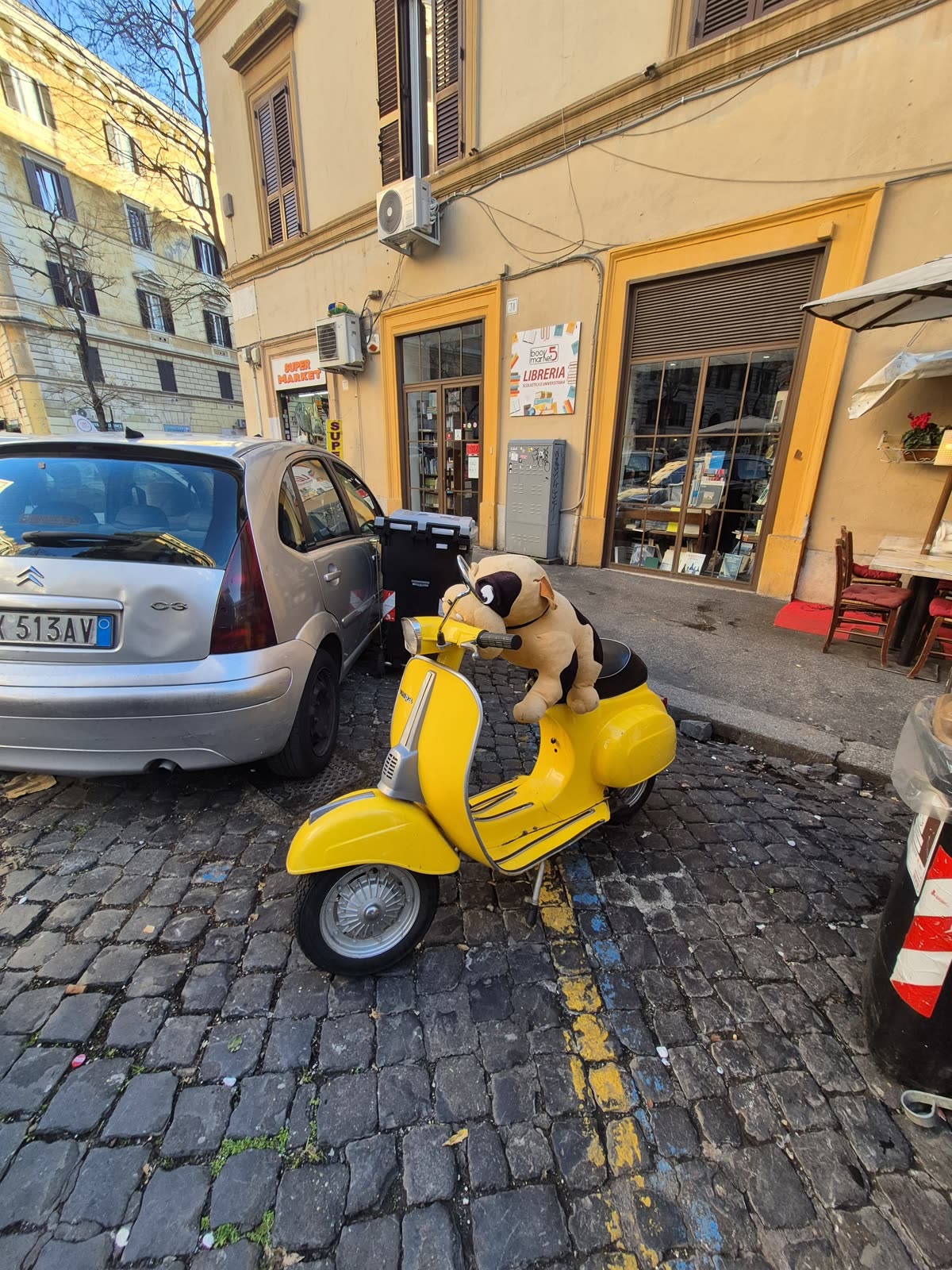
A yellow Vespa on a Roman side street, with a passenger.
Florence (Dec 27–28)
Florence got barely a day and a half and deserved a week. It felt more alive than Rome somehow — more families, more children, more of a lived-in city wrapped around Renaissance bones.
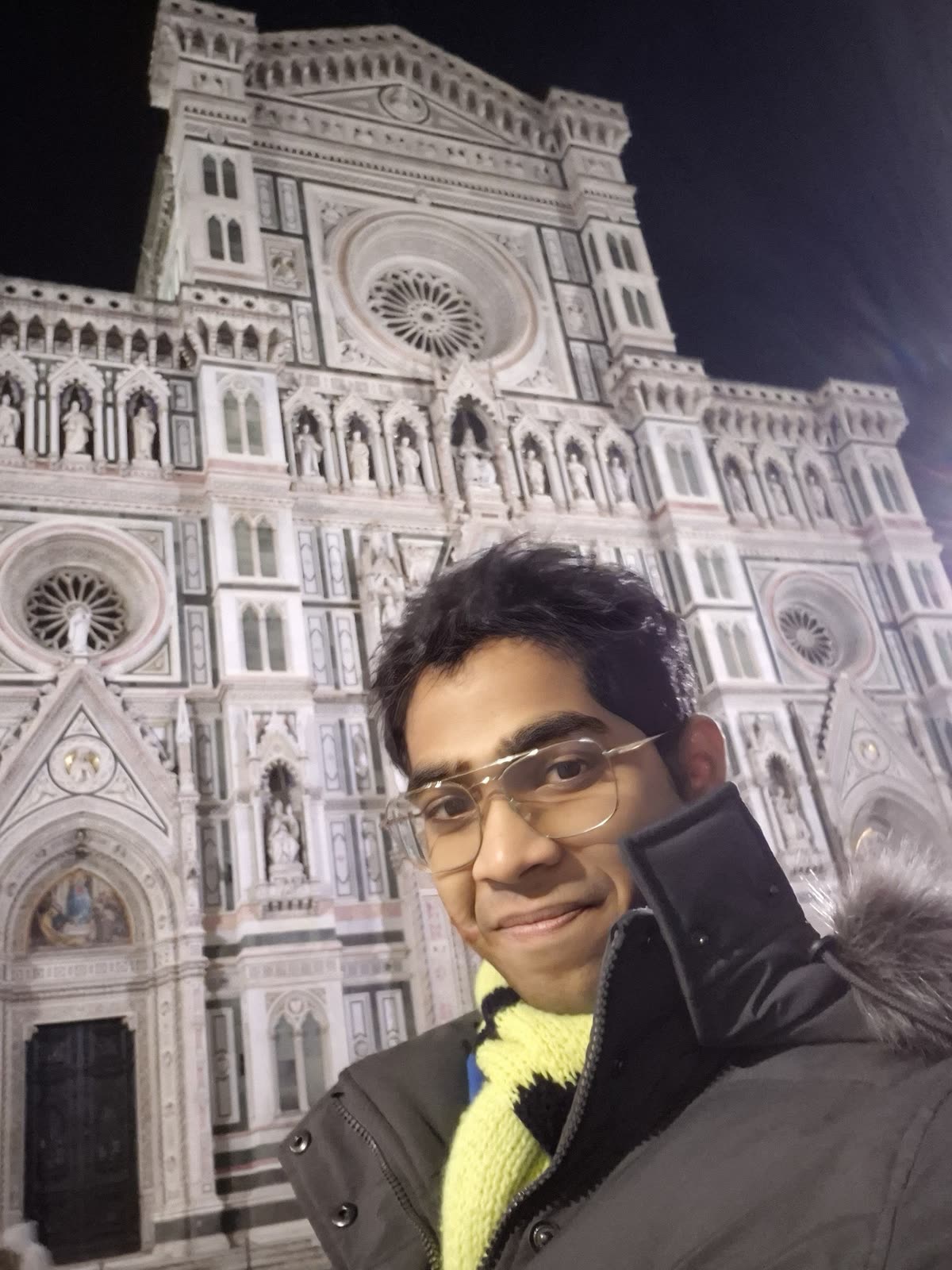
The Duomo on our first evening in Florence.
- David. The real one, at the Accademia. Photos do not prepare you — it’s the smoothness that gets you, marble that reads as skin. The same gallery has Michelangelo’s Prisoners: unfinished figures half-emerged from their marble blocks, which show you exactly how a statue is “freed” from the stone. Seeing the unfinished ones next to the finished David is the best art lesson I’ve ever gotten in ten minutes.
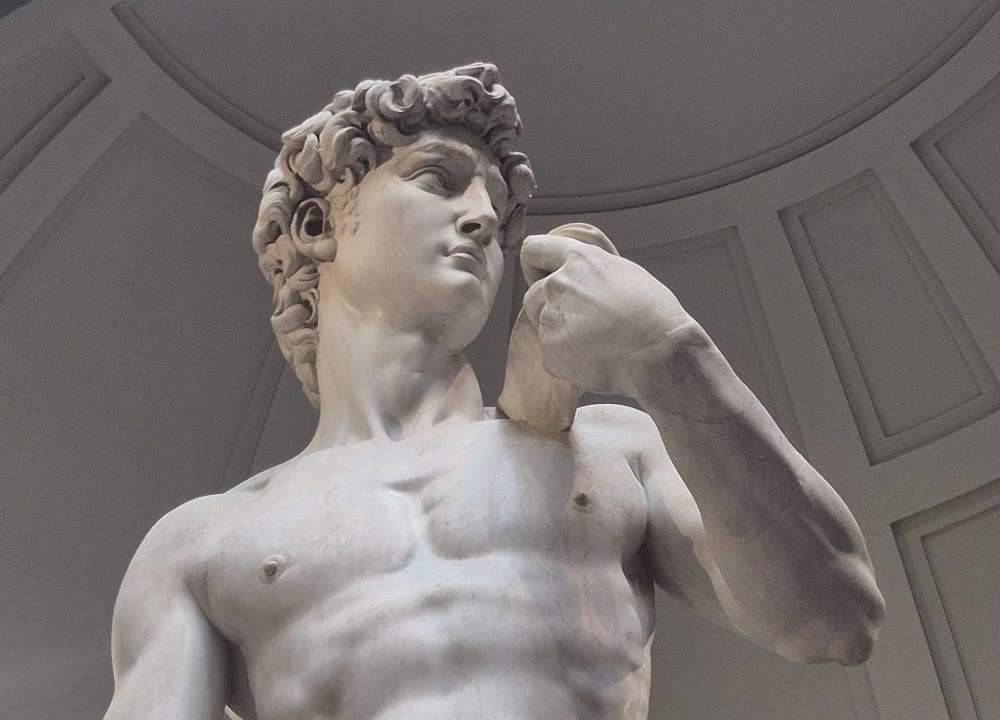
David at the Accademia. It’s the smoothness that gets you — marble that reads as skin.
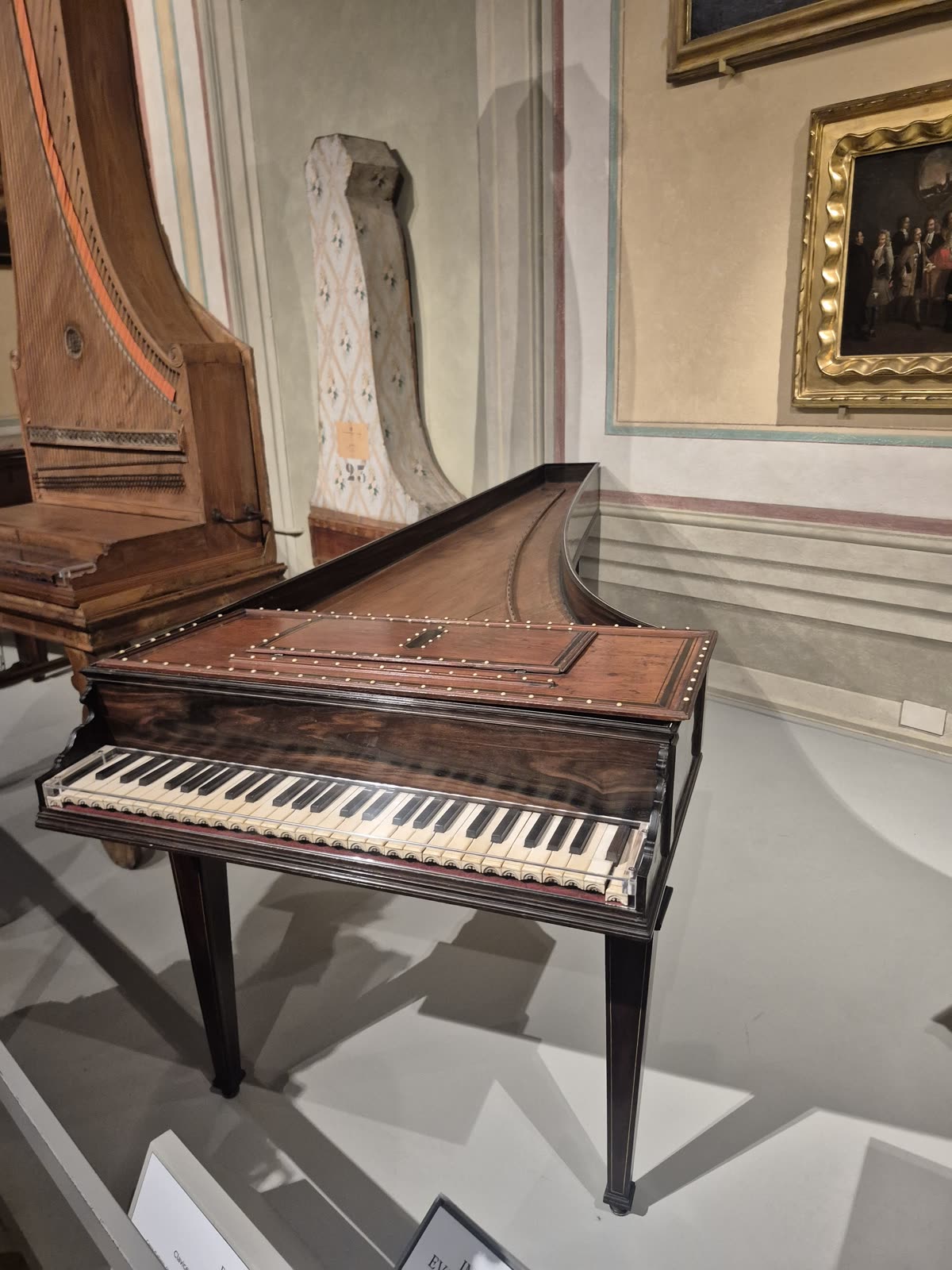
The Accademia also has a room of old harpsichords and early pianos.
- The Vasari Corridor. This is the secret elevated passage the Medici built from the Palazzo Vecchio over the Ponte Vecchio. I knew it from Dan Brown’s Inferno, where Robert Langdon runs through it to escape across the river. Standing on the bridge and seeing it in real life, I kept picturing that chase. It was a proper full-circle moment.
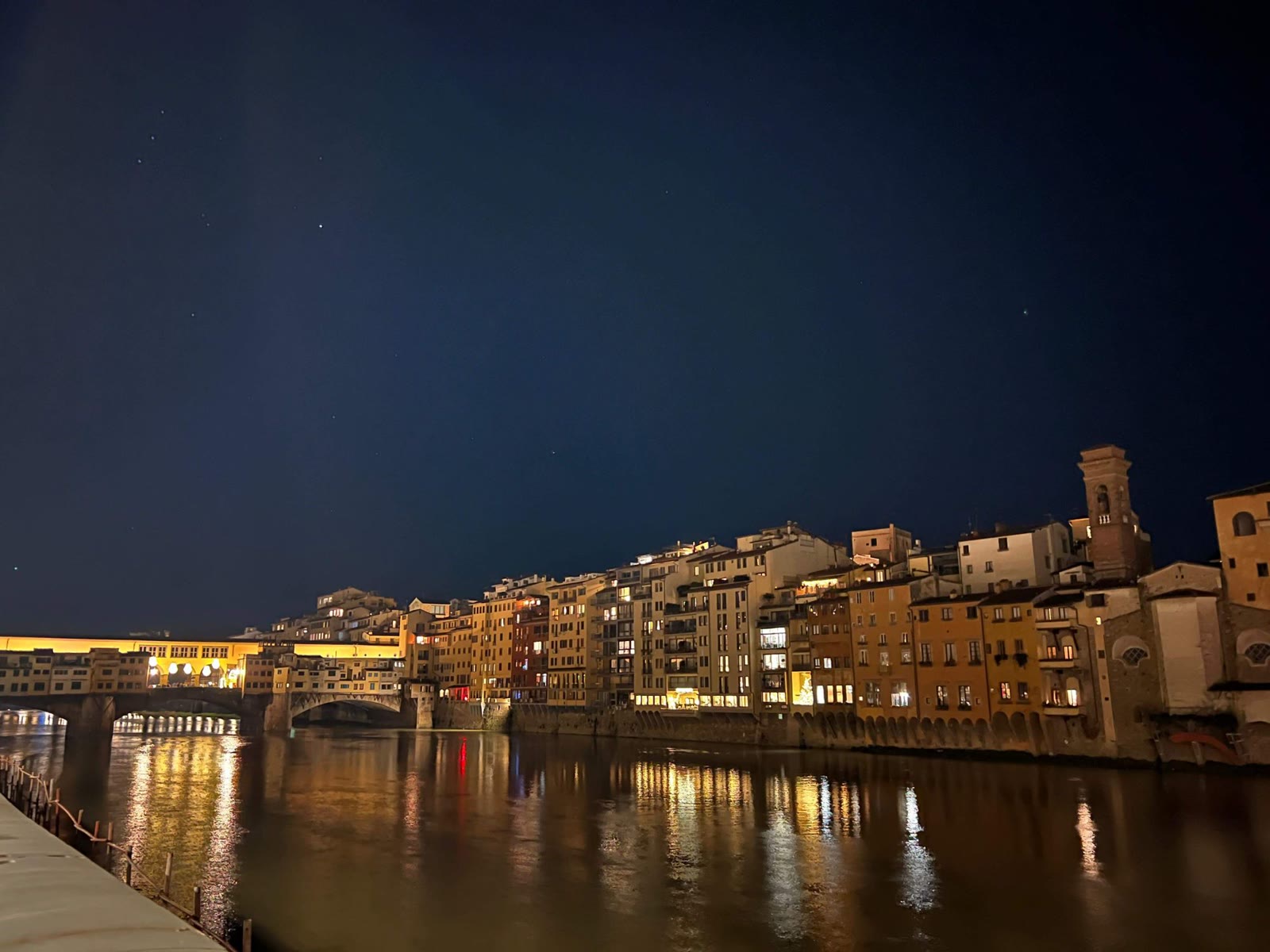
The Ponte Vecchio at night. The Vasari Corridor is the long lit-up passage running along the top of the bridge.
- The Duomo — really beautiful, though we couldn’t get inside on the Sunday. We came back to it at night instead, when the whole marble front is lit up, and there was a big nativity scene set up in the square. Piazzale Michelangelo, for the view over the city, is on the list for next time.
- The T-bone steak. Bistecca alla fiorentina is sold by the kilogram, and we ordered a full kilo (85 euros) on confident advice. We could not finish it. Order less than you think.
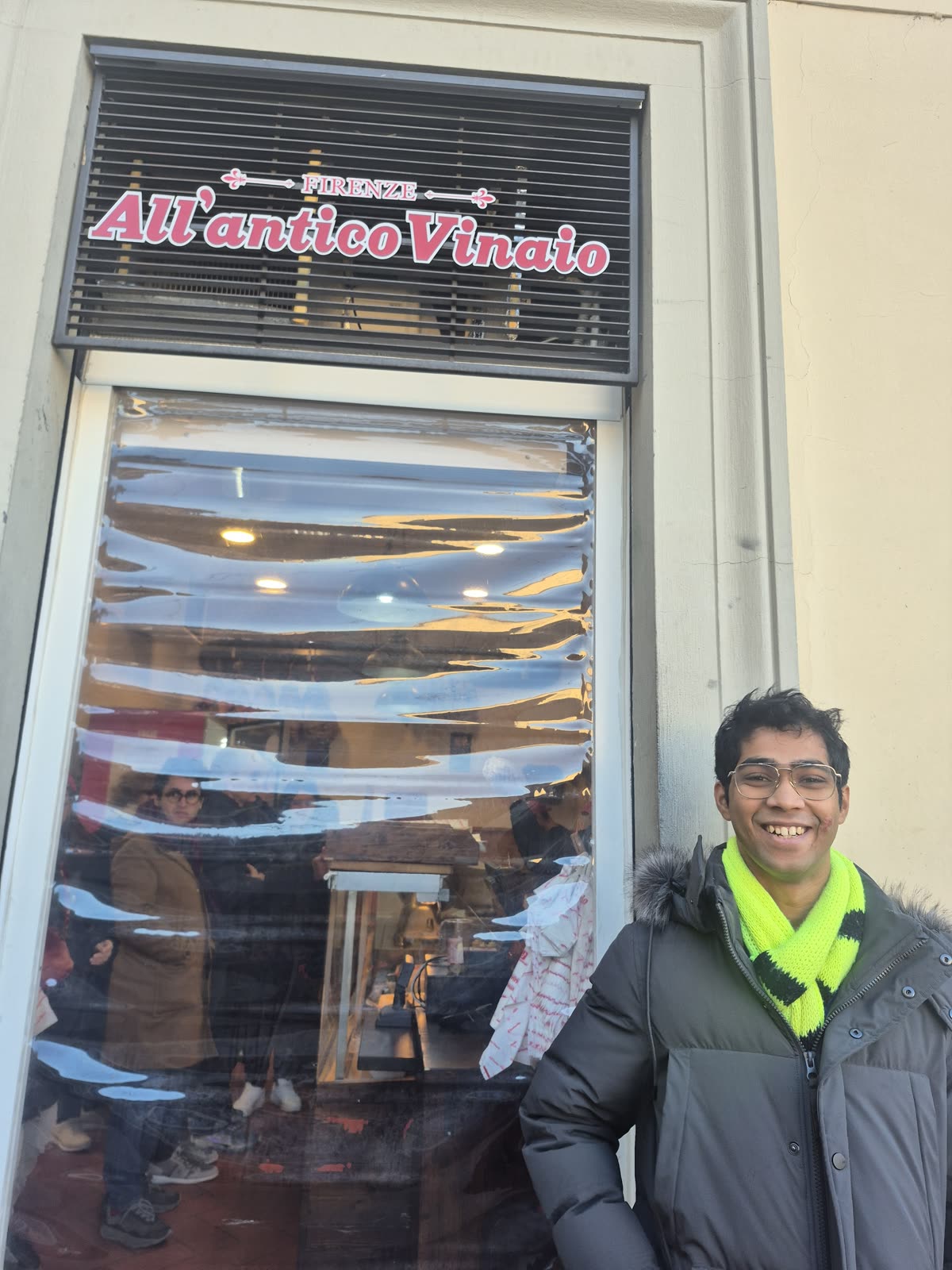
Outside All’Antico Vinaio, the famous sandwich shop.
Left for next time: the interactive Leonardo da Vinci museum. Florence is firmly on the return list.
Venice (Dec 28–30)
The arrival alone is worth it: the train crosses the lagoon and you step out of the station directly onto a canal. No cars, no roads — your bus is a boat. We took the Vaporetto (the public water bus) four stops to the hotel and I never stopped finding it charming, even after we missed our stop once because the thing moves faster than you expect.
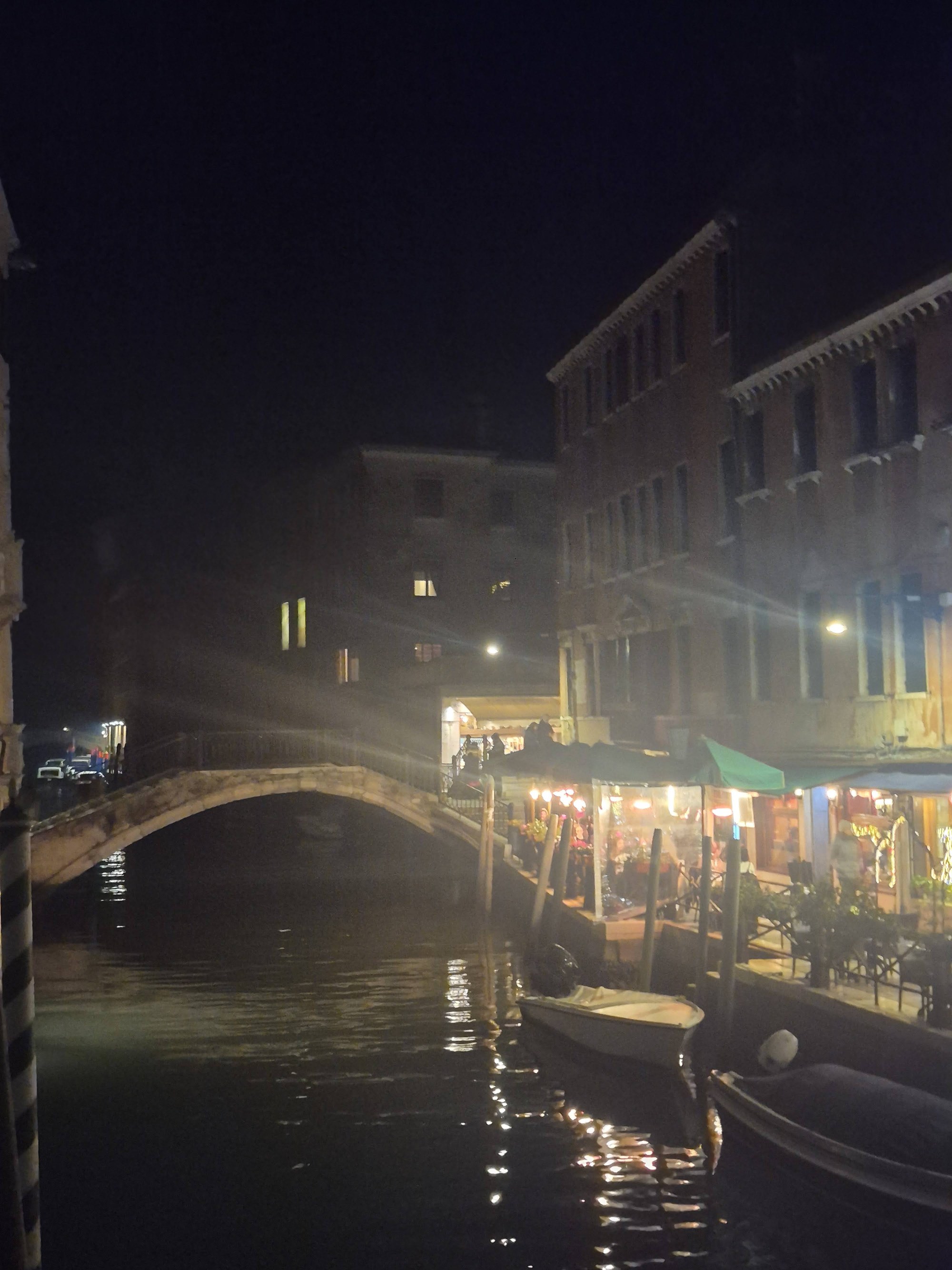
Venice — no cars, no roads. Your bus is a boat.
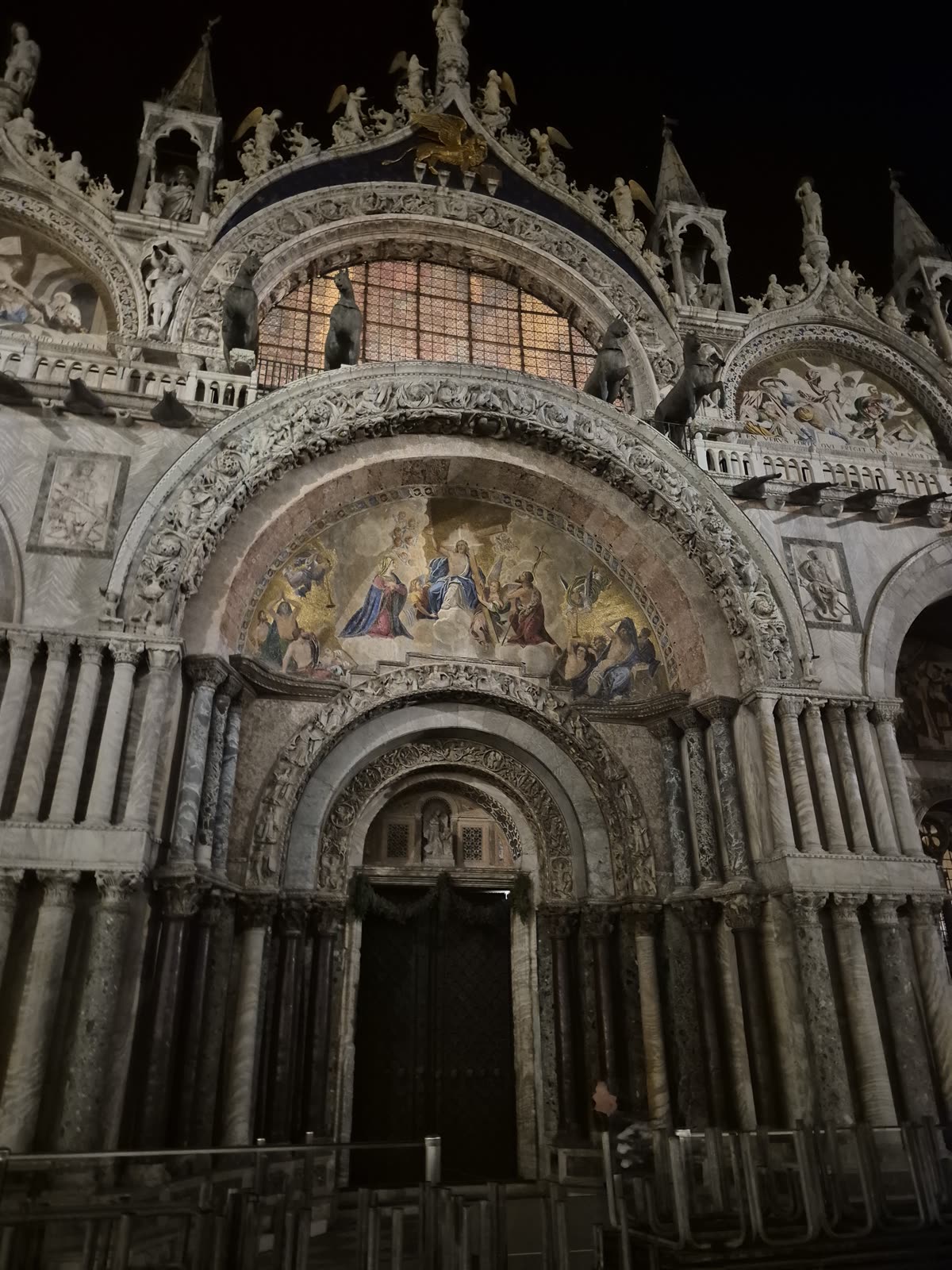
St. Mark’s Basilica, our first night in Venice.
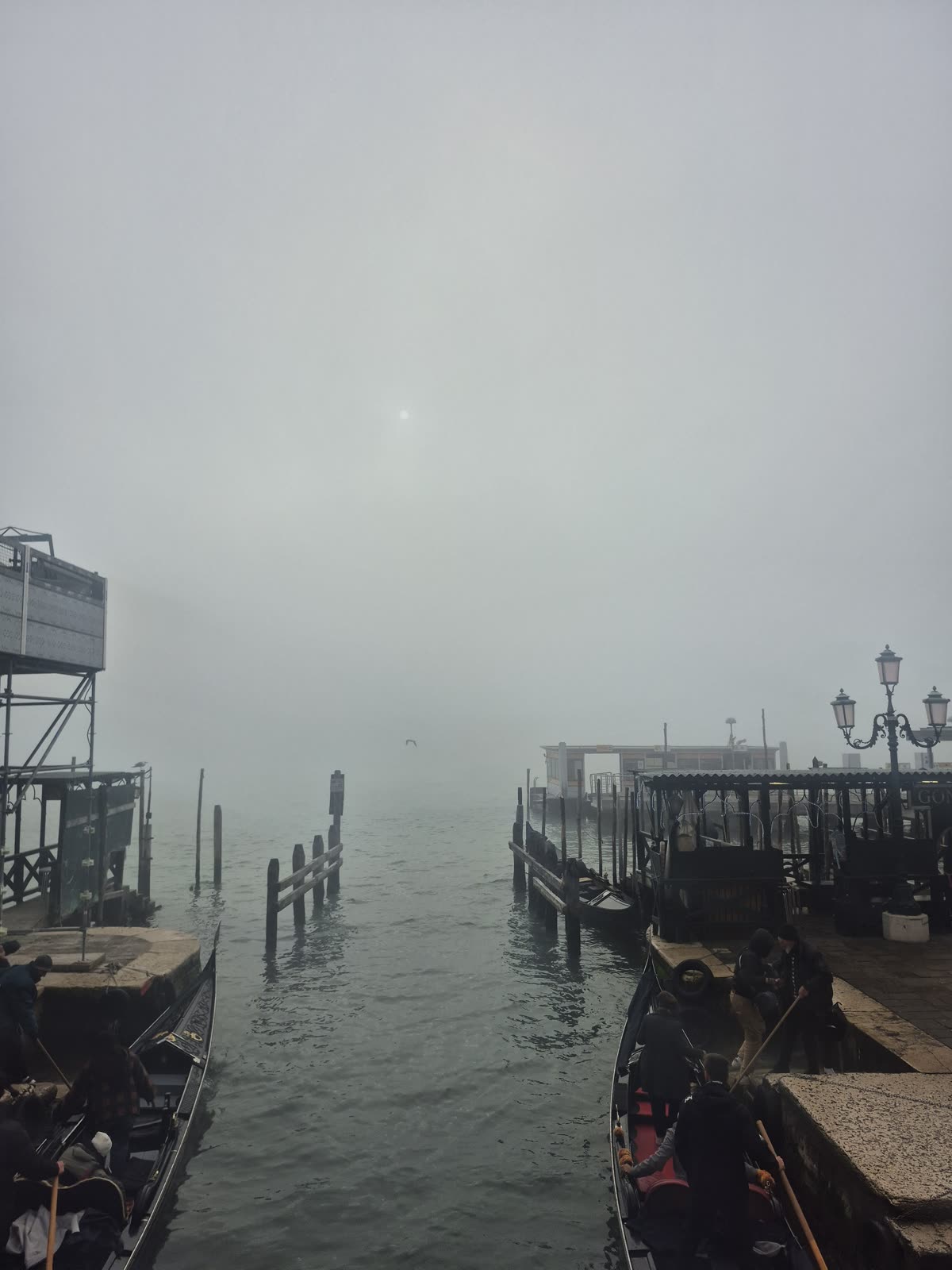
The next morning, the fog rolled in.
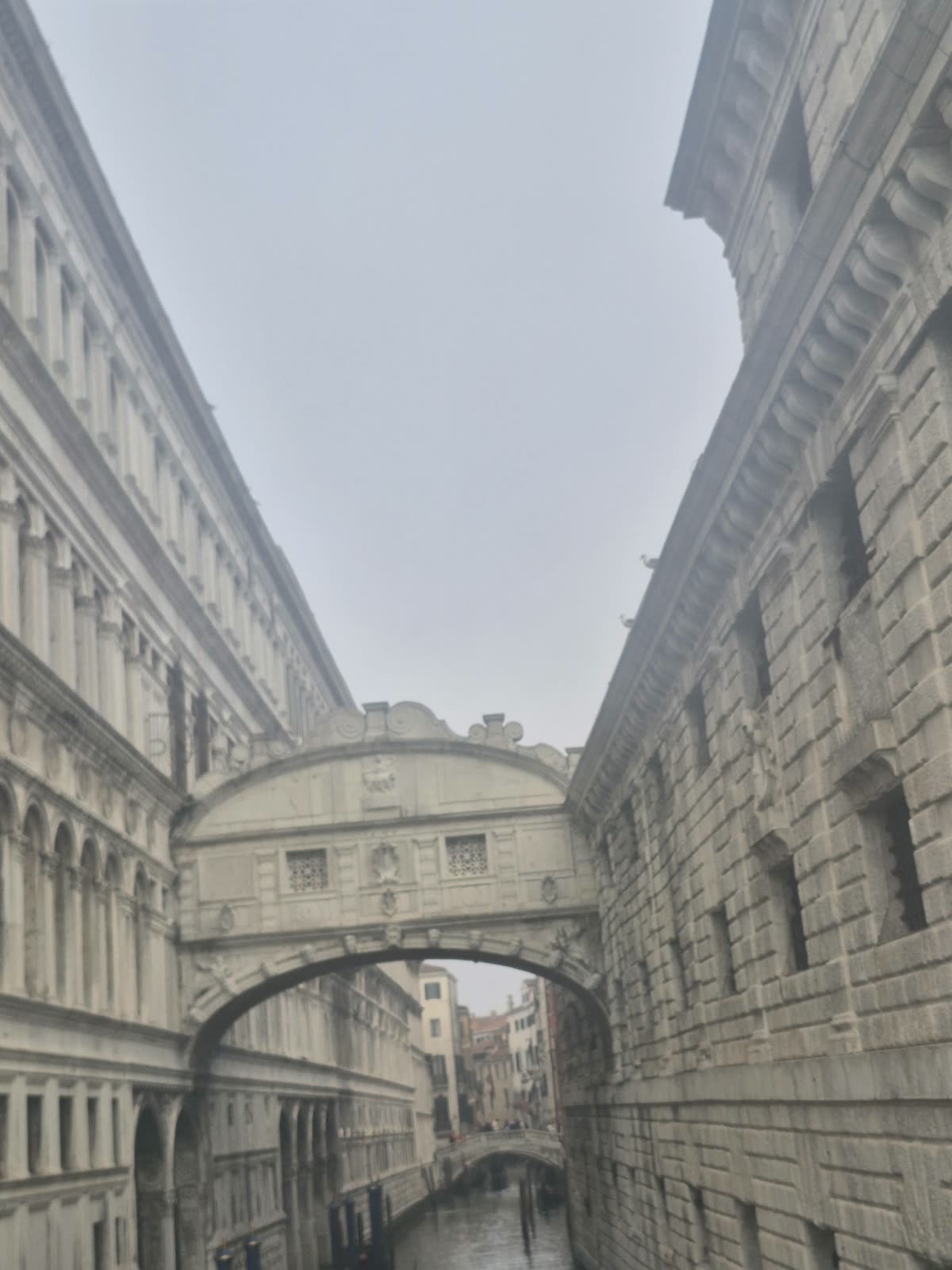
The Bridge of Sighs, which connects the Doge’s Palace to the prison.
Doge’s Palace was the intellectual highlight. Venice was once a merchant-republic superpower — the palace is basically the machinery of that power preserved in marble. And then the sobering coda: the city’s population has fallen something like 95%, with fewer than 5,000 actual residents left in the historic centre. You’re walking through a working museum whose city has mostly moved out. Look for the Squero di San Trovaso — one of the last working gondola repair yards — for a glimpse of the Venice that still functions.
There were posters for Vivaldi concerts in churches all over Venice. I really wanted to go to one, but it didn’t happen this time, so that’s on the list for next time.
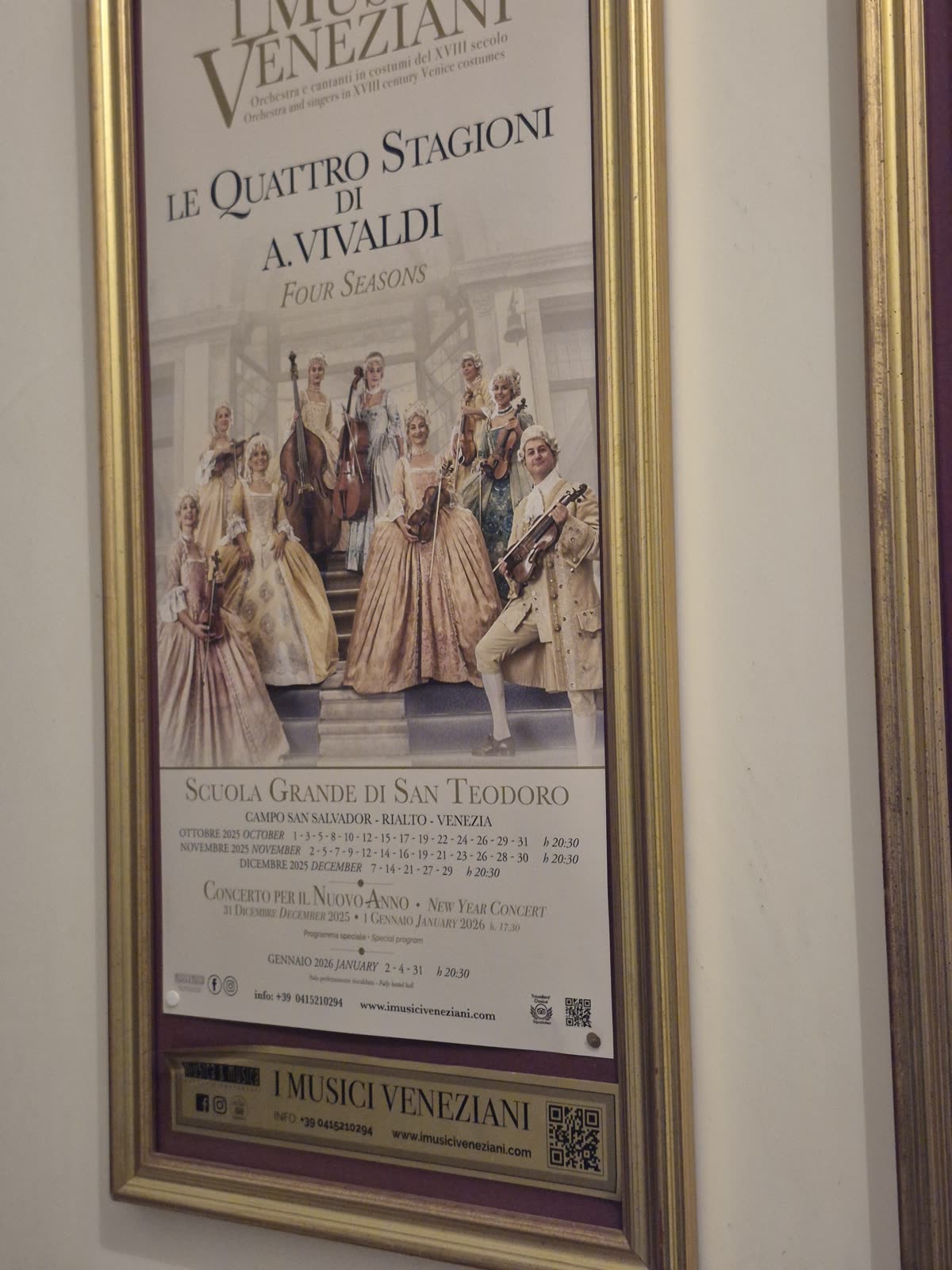
The Four Seasons, in Venice. One for next time.
We did climb the campanile in St. Mark’s Square, all the way to the very top. It was so foggy that day that we couldn’t see much at all, but we made it up there.
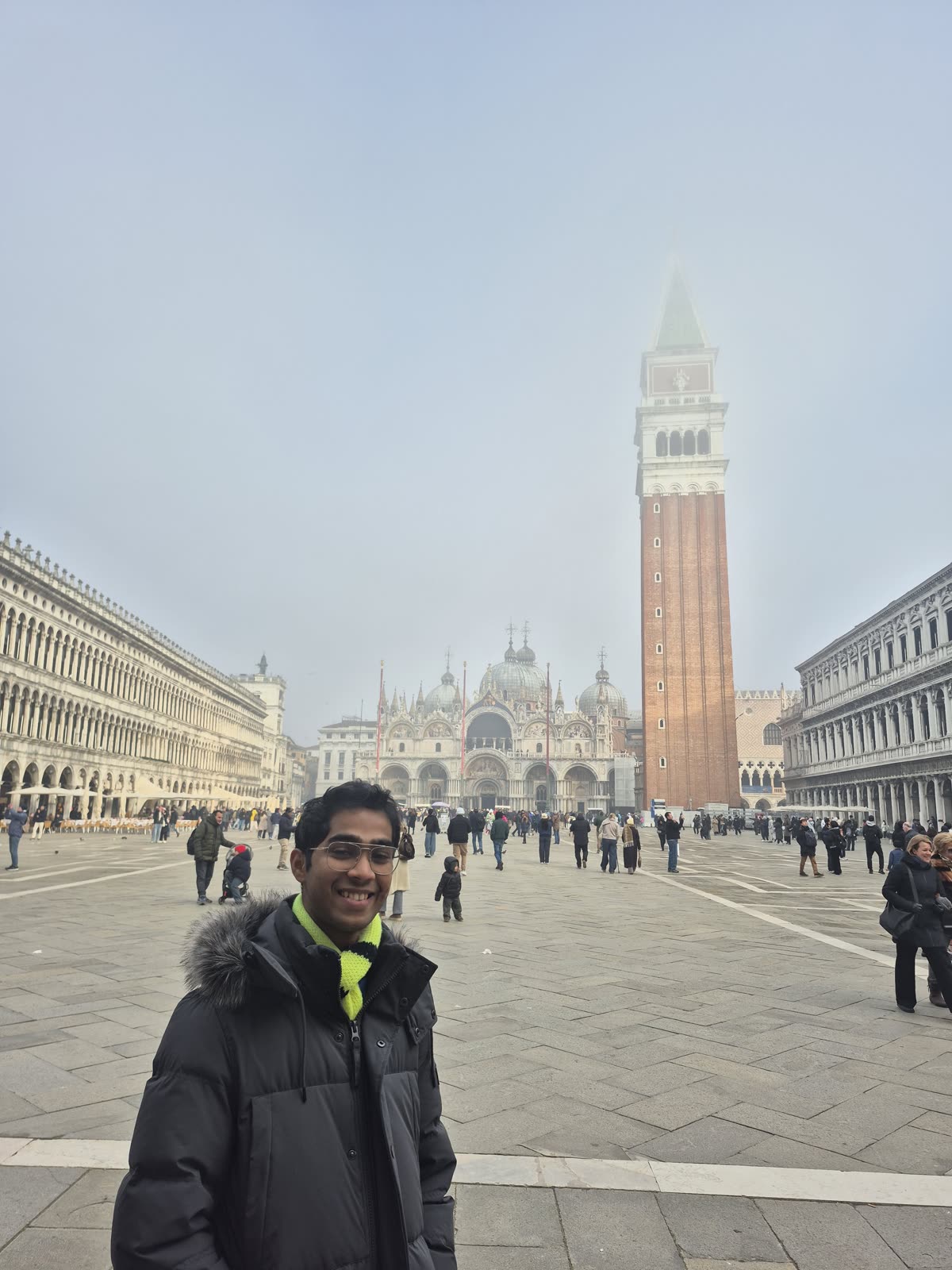
Under the campanile, before we climbed into the fog.
Verdict
Italy was the clear winner of the three countries — I’d rank Florence and Venice above everywhere else on the trip, and I’ll definitely be back (Milan, Bologna, and a Pompeii day trip are already on the list, on good advice from a friend who’s been to Rome six times). Winter turned out to be a great time for it: thinner crowds, mild days, and Christmas in Rome as the anchor.
The trip home had one last gift: a flight in a two-seat row — the best economy configuration that exists — and landing in New York on the 30th, just in time to close out the year.
Notes to myself
- Climbing St. Peter’s dome was one of the best things in Rome, stairs and all.
- Trains between Rome, Florence and Venice were fast, cheap and scenic. In Venice, the Vaporetto pass.
- Using ChatGPT as a tour guide in front of the monuments is something I’ll do again anywhere history-heavy.
- The currency exchanges near the Trevi Fountain are a rip-off. Card or ATM.
- Fiorentina steak is priced per kilo. A kilo is a lot.